The European Union's Digital Services Act (DSA) marks a turning point for online platforms: they are now legally required to mitigate systemic risks, including the spread of disinformation and manipulative content. For the first time, the regulatory spotlight is on ensuring that digital spaces are safer, more transparent, and accountable.
Against this backdrop, our team introduced WASPer, a Bulgarian-language AI model designed to detect propaganda in social media and online comment sections. The model was introduced in a scientific paper recently published*, where we detail the dataset construction, training methodology, and evaluation results.
Why WASPer?
Propaganda today is increasingly powered by AI. Sophisticated troll networks and synthetic text generators can rapidly produce persuasive content that manipulates opinion, fuels polarisation, and undermines democratic processes. The DSA explicitly requires platforms to counter such risks, making propaganda detection not just a research problem, but a regulatory necessity.
WASPer helps meet this challenge. Fine-tuned on a thematically diverse dataset of both organic and synthetic Bulgarian texts, the model achieved an F1 score of 0.85 in distinguishing propaganda from authentic discussion. Its language-specific focus addresses a major gap: most existing disinformation detection tools are limited to English. This makes it not just a research contribution, but a practical tool aligned with DSA requirements for risk mitigation.
Open-source as a public good
We believe compliance with the DSA is not only about regulation, it's also about societal responsibility. That's why we made WASPer open-source. By sharing the model publicly, we invite researchers, developers, and platforms to use it, adapt it, and extend it to other languages. This openness ensures transparency and strengthens collective efforts to create a healthier digital information ecosystem.
*Petrova, Y., Kiryakov, T., Kotseva, D. & Kostadinova, B. (2025) WASPer: A Bulgarian-language Model for Detecting Propaganda in Social Media Content. In: The Eleventh International Scientific Conference of the European Studies Department, Jean Monnet Centre of Excellence, Faculty of Philosophy at Sofia University "St. Kliment Ohridski", p. 223.
Meet the team behind the contribution
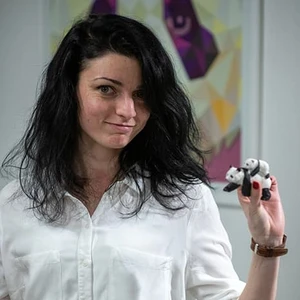
Yolina Petrova, PhD
Chief Operations & AI Officer
“WASPer represents far more than just a research milestone. It embodies a vision of AI as a force for good, one that is operationally practical and socially responsible. By aligning innovation with the requirements of the Digital Services Act, we show that AI can help platforms protect democratic discourse. Our responsibility as AI leaders is not merely to advance technology, but to ensure it safeguards society where the stakes are highest.”
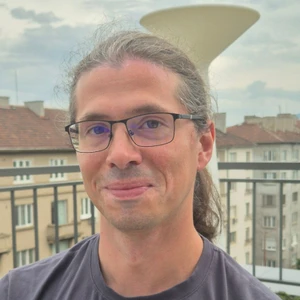
Todor Kiriakov
Information Integrity Specialist
“With WASPer, we set out to prove that AI can be used not only to amplify the already critical information threats, but also to counter them and uphold information integrity. While the exploration of propaganda's inner workings was in itself a fascinating intellectual experience, we never lost sight of our goal to contribute to a healthy, open, and truthful information sphere.”

Devora Kotseva
Information Integrity Specialist
“WASPer brings together human expertise and technological advancements to address one of the pressing challenges of our time, namely the state of democracy and the clash between proof and propaganda. We hope that WASPer would provide insight into the persuasive messages and propagandistic techniques that sway people and policies, as democracy relies on informed individuals and healthy public debates.”

Boryana Kostadinova
Data Scientist & Linguist
“Working on WASPer allowed me to see firsthand how AI can be applied responsibly to the growing problem of propaganda and manipulation online. I'm proud to have contributed to a project that not only advances research but also strengthens our ability to protect trust in the digital information space.”
About the authors
Yolina Petrova, PhD
Chief Operations & AI Officer, Identrics
Yolina combines Cultural Studies and Cognitive Science. She is Chief Operations & AI Officer at Identrics and lectures Statistics and cognitive courses at NBU. Her research focuses on trust dynamics between humans and AI systems and cognitive modelling.
Connect on LinkedInTodor Kiriakov
Information Integrity Specialist, Identrics
Todor is an Information Integrity Specialist at Identrics. He focuses on the intersection of AI and information integrity, working to counter disinformation and uphold trust in the digital information space.
Devora Kotseva
Information Integrity Specialist, Identrics
Devora is an Information Integrity Specialist at Identrics. She brings together human expertise and technological advancements to address challenges in democratic discourse and public debate.
Boryana Kostadinova
Data Scientist & Linguist, Identrics
Boryana works at the intersection of human language and machine intelligence. With a background in Classics and Linguistics, she is the human-in-the-loop between algorithms and the people who use them - refining models for more natural interaction.